


From coffee husk to brain health: the science behind Iom Bioworks' prebiotic push
Bengaluru-based Iom Bioworks is using microbiome science to convert coffee husk into prebiotic fibre, aiming to support gut-brain health through pectic oligosaccharides.

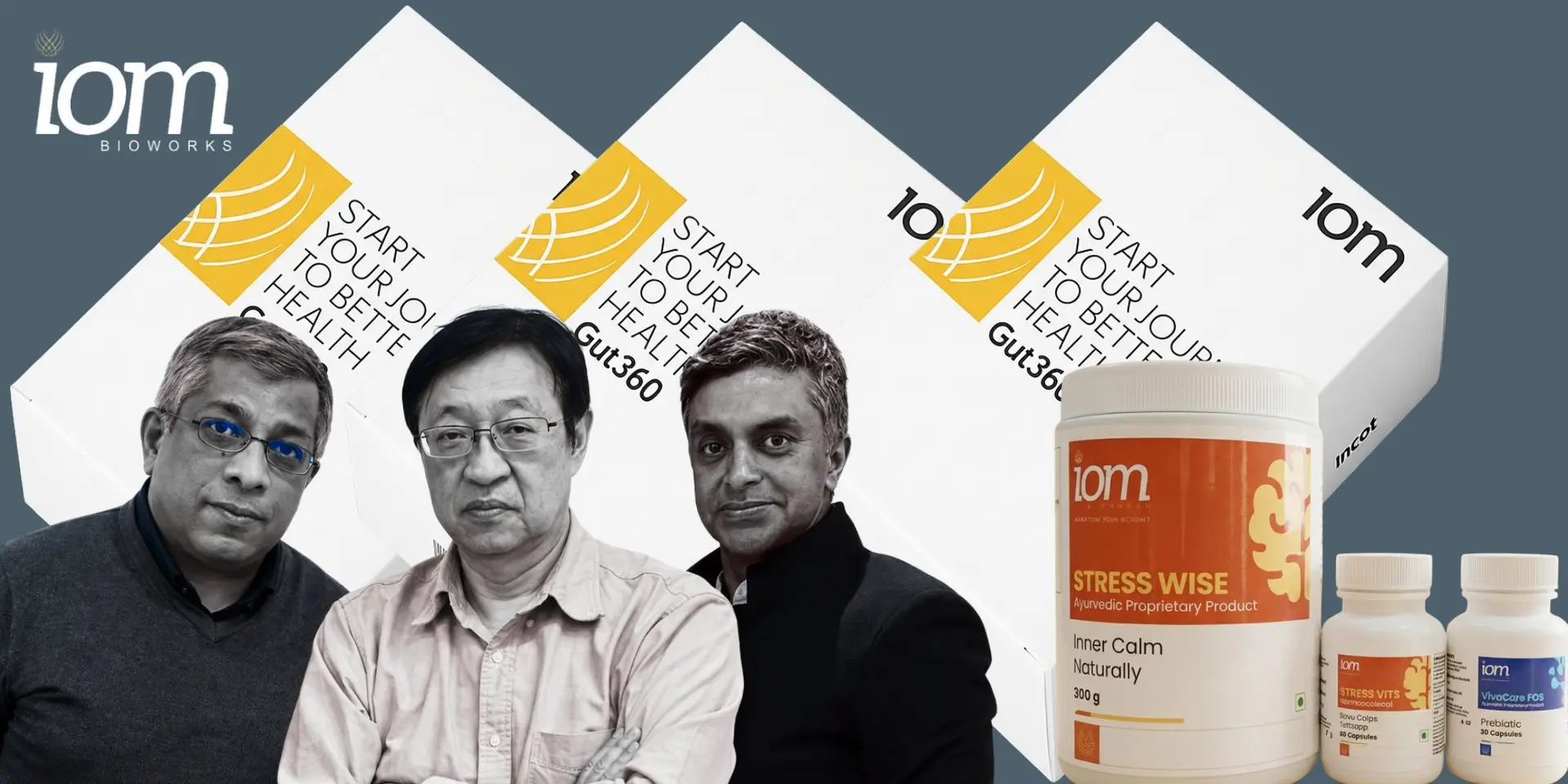

For years, the link between the gut and the brain was treated as wellness folklore. Today it is a closely studied frontier in human health, and a Bengaluru deep-science company is betting it can turn that research into something people can buy. Iom Bioworks, which positions itself as India's first science-backed microbiome healthcare company, is developing a way to convert underutilised coffee husk into pectic oligosaccharides, a prebiotic fibre with documented neuroprotective potential, as part of a wider push into the gut-brain axis.
The gut-brain axis describes the constant, two-way communication between the digestive system and the brain, a channel increasingly tied to mood, sleep and stress. Feeding the right bacteria with prebiotic fibres is one way researchers believe that dialogue can be influenced. India's biotech sector is set to reach $300 billion by 2030, and gut-led wellness has moved firmly from niche to mainstream.
A science-backed approach to gut and brain health
This is not a company waiting on a single idea. Founded in 2022, it personalises health by identifying and modulating key gut bacteria, pairing microbiome data with AI and mathematical modelling. It already sells DNA sequencing-based microbiome tests and targeted prebiotics, including formulations aimed at sleep and stress and a test it markets as India's first in-depth gut microbiome test for PCOS, with processes certified to ISO 9001 and ISO 27001. The startup crossed 500 customers in its first year and holds two granted patents, with two more nearing completion. In June 2025 it raised Rs 4 crore in a seed round led by Inflection Point Ventures.
The coffee husk project is where the company's science is most visible, and the thesis is not improvised. Iom Bioworks' head of bioproducts research, Dr Divyashri G, is the lead author of a peer-reviewed review in Frontiers in Pharmacology that set out the experimental evidence for the neuroprotective potential of non-digestible oligosaccharides, pectic oligosaccharides among them. Published research has separately shown coffee processing waste to be a viable source of biologically active pectin, the material from which these oligosaccharides are made. India, a major coffee grower, generates the husk in large volumes, so the company is industrialising a pathway its own scientists have already mapped in the literature.
The leadership adds weight. Alongside founder and chief executive Bipin Pradeep Kumar and chief scientist Dr Samik Ghosh, the company counts Dr Hiroaki Kitano among its co-founders. Kitano helped pioneer the field of systems biology and is Chief Technology Officer of Sony Group and Chief Executive of Sony AI, a pedigree rare for an early-stage Indian wellness venture. The idea has earned national validation too, having been named among the winners at the National Bio Entrepreneurship Competition (NBEC) 2025, run by the Centre for Cellular and Molecular Platforms (C-CAMP), a Bengaluru-based life sciences research hub and one of India's largest biotech incubators. NBEC is among the country's most prestigious platforms for deep-science entrepreneurs.
What are pectic oligosaccharides, and how can coffee husk help the brain
Pectic oligosaccharides, or POS, are short chains of plant sugars made by breaking down pectin, the fibre that makes jam set. Coffee husk is rich in pectin, which is how a discarded by-product becomes a useful starting material.
Their value lies in survival. POS resist stomach acid and reach the large intestine intact, where beneficial bacteria ferment them, producing compounds research has linked, through the gut, to reduced oxidative stress in the brain and to signals that support nerve cell health.
The brain-protection evidence is still strongest in laboratory and early studies rather than large human trials, so these remain scientifically grounded wellness products rather than medicines. But if Iom Bioworks can scale the coffee husk process, the payoff is threefold: a low-cost homegrown prebiotic, a productive use for farm waste, and a product line rooted in published science. The next milestone is the human data that would carry it from promising to proven.