


Ashwini Nachappa on breaking barriers, success, and building tomorrow’s champions
Olympian and Arjuna awardee Ashwini Nachappa reflects on her journey in athletics—from competing against the best, including defeating PT Usha, to mentoring and creating pathways for the next generation of athletes.

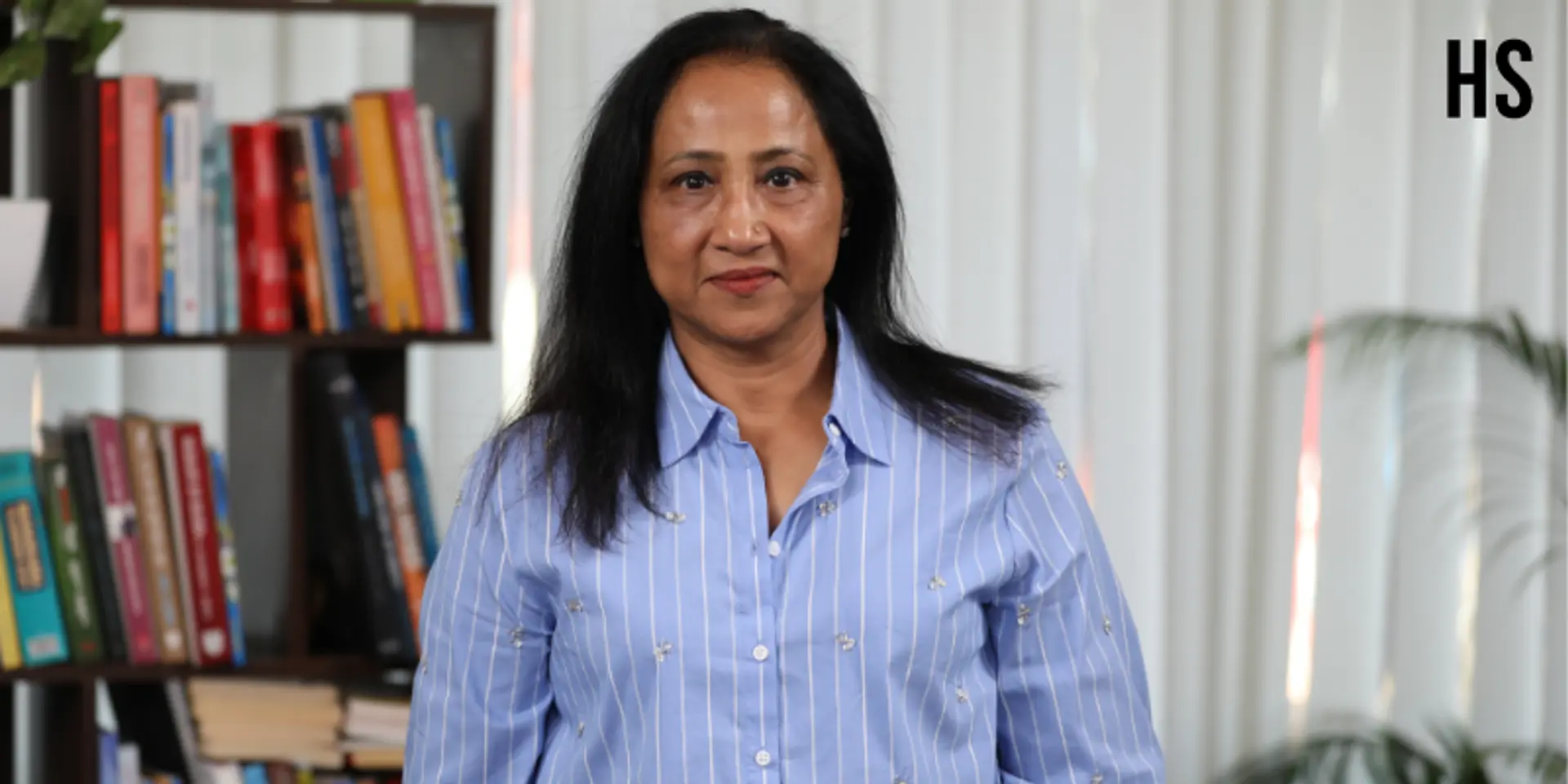

Ashwini Nachappa, famously known as India’s FloJo (after the US sprinter, Florence Griffith Joyner), was a dominant force in the sprint circuit in the 1980s and ‘90s.
She shot to fame when she outran sprint queen PT Usha on two occasions.
Nachappa had a distinguished international athletics career, representing India at three South Asian Federation Games—winning two silver medals each in Nepal (1984) and Bangladesh (1986), followed by an impressive three gold medals in Pakistan (1988).
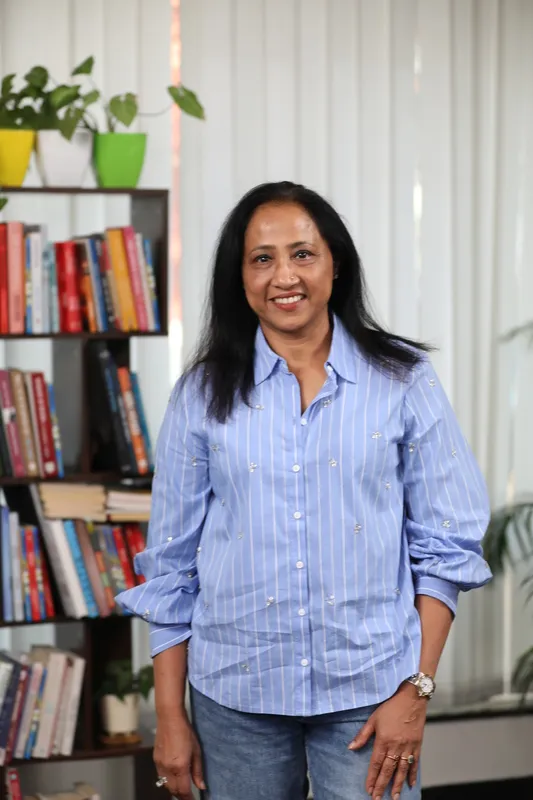
She also competed in two Asian Games, finishing sixth in the long jump at the 1986 Seoul Games and winning a silver medal as part of India’s 4x100m relay team at the 1990 Beijing Asian Games.
Her global appearances included the World Championships in Rome (1987) and Tokyo (1991), where she was part of India’s 4x400m relay squad on both occasions.
In a notable domestic achievement, she clinched the 200m gold at the 1990 National Open Meet in New Delhi, finishing ahead of Usha with a timing of 24.07 seconds.
An Arjuna Awardee, Nachappa did not end her tryst with sports with retirement.
She went on to shape the next generation of athletes through Karaumbiah Academy for Learning and Sports (KALS) and Ashwini’s Sports Foundation, building sustainable pathways for young talent, especially from rural India.
In a conversation with YourStory’s Senior Director - Strategic Partnerships & Content, Shivani Muthanna, Ashwini Nachappa takes us through her journey in sport, beating PT Usha, creating new pathways, and what legacy means to her.
Edited excerpts from the interview:
HerStory (HS): Going back to your early days, when did you realise that speed wasn’t just talent but an identity that you wanted to create for yourself? And what did discipline look like before all the medals came in?
Ashwini Nachappa (AN): I took up sports by chance. Though I was born in Coorg, my dad used to work in Kolkata, and we lived there. The late ‘70s were a time of chaos and a lot of strikes, workers' unions; so my sister and I moved to Bengaluru to pursue an education.
Our house was next to the Kanteerava Stadium, and we would walk there every evening to watch all the athletes run. The discipline was already set in at that young age, intentionally by my mother, and we were bribed to run. We would get a Nutrient sweet for every lap we ran, and I think at that early age, collecting those sweets became a passion.
The coaches recognised our natural talent and encouraged us to run at an early age. My sister and I went on to become school and state champions, running in our Bata shoes.
HS: You went on to prove yourself, win, and create many records. You became an elite athlete in an era with limited sports science, infrastructure, visibility, and support. So what did preparation look like when it actually came to that level—both mentally and physically?
AN: The support was just our coach and the family. At that time, the Bangalore school games would be like the Olympic Games. There was no transport, we would just walk from every school and culminate in that stadium. I think winning at that young age really propelled that journey into the state championships, the national championships, and then, as a young athlete, you always want to be at the Olympic Games and represent the country. It wasn't so much about breaking a record.
My very first spikes were handed over as a gift from my PE teacher, who was from Sri Lanka. These are people who really touched our lives, to not look back and just look forward. MP Ganesh, the former Olympian, gave us our first tracksuit. So many in this journey really stood with us.
We didn’t have a synthetic track. It was a cinder track. Sports science was unheard of. We just ran because we just love to run.
HS: In the 1980s, women’s visibility in sport came with both admiration and scrutiny. So how did you deal with some of that pressure, the expectations, and the public perception?
AN: I was fortunate to have a mother who was truly a woman of substance. My father continued working in Kolkata and sent the little money we had. And she made it a point that, till the day I retired, she would walk with me to the stadium, sit there, and just watch.
Once you start winning and getting to be known—those days, every paper had the Bangalore school games covered, the nationals—and we always came back home with a medal. So I think when you have a journey like that… I didn't worry about the outside world at all.
PE teachers really disciplined us in school. We went for basketball, we went for hockey, we all played sports—and it was a great atmosphere at that point in time. It’s only now that I think we, as parents, need to be blamed as well as educators, because we are overly protective of our children. We don’t want them to go through what we've gone through. So I think that’s where it’s all diluted.
HS: Takes us back to the 1988 Olympics in Seoul. What was that journey like?
AN: The first international championship that I took part in was the SAF Games in Nepal in ‘84. I think wearing the Indian colours is a different feel. By the time I was 16-17 years old, I was already representing the country. Qualifying for the Olympic Games was an achievement in itself, given our very limited exposure.
HS: You also competed against the big names and defeated icons like PT Usha. What worked for you? Your temperament, the way you were trained, or something deeper?
AN: For a long time, I was perfectly happy coming second to Usha. She felt invincible—one of Asia’s greatest athletes—so beating her wasn’t even on our horizon. That changed when I met sports psychologist Dr Rupen Das in the late ‘80s. He introduced me to meditation and visualisation, which completely transformed my mindset. I stopped racing against a person and started racing against time—against the goals I had set for myself.
That mental shift changed everything: my performance, my approach to competition, even my outlook on life. Sports psychology taught me to set realistic targets, stay intensely focused, and respect rivals without being defined by them. It was such a game-changer that we even proposed introducing sports psychology into India’s training system.
HS: You were also known as one of India's glamour girls in the sports field—a label that can both elevate and, in a sense, trivialise the achievement. So how did you navigate being seen not just as an athlete but also as a public figure?
AN: No, I think that's what the media called me because I was in an era where all of us had basic clothing. We didn't have fancy clothing. It just so happened that my sister was in the US—she went on a sports scholarship to Arkansas—and had already sent a few pieces of running gear by the time I started wearing leotards and one-piece suits, and I always had long, polished nails. So I was comfortable in my own skin, and I have always wanted to be different, especially on the track. It always made me perform better. And that’s how people started—the media started labelling. It doesn’t trivialise as long as your performance does the talking.
HS: How do you define success after stepping away from competition to build something new and sustainable?
AN: For me, every phase in my life has not been consciously made. It has been organic, and God has been kind. When I retired from my athletic career. I got into movies. It was a chance I took, and I did well. I was also working at the bank for 16 years. One day, I resigned, and my husband and I decided to start a school.
I believe that in every step you take, give it 100%, and when you don't enjoy it, just move on and find another path. When I retired from athletics, I was at the peak.
I was heading the Special Olympics programme for people with intellectual disabilities. We had 80,000 children. I would travel with the team and loved working with the team.
My husband and I decided to start an institution (KALS) in our hometown to integrate sports into the curriculum, and just let children enjoy and experience sports.
Every child from Grade 1 to Grade 12 is in the field at that particular time. We have about eight or nine people in the PE department, I think one of the largest in any school. Every academic teacher is involved in any sporting activity that takes place on campus. So it’s like a big family that’s growing through sports and education.
HS: What would your message be to aspiring women athletes who want to break barriers?
AN: Believe in yourself. Believe in the process. Don’t look for shortcuts. Failures are a crucial part of everyone’s journey, so embrace them—don’t fear them. Never doubt yourself. With your support system, stay committed to your goal, regardless of how many setbacks you face. It will take time, so have patience. But above all, trust the process.
HS: What does legacy mean to you, being one of the women changemakers in culture, sports, and community, and everything you’ve done to create this pathway for women in sports?
AN: If I can contribute to the community, impact lives through sports, and mentor young kids—that’s what I’ve tried to do all my life. If people remember me for that, and also for the courage I have shown on and off the track, I would be happy. Also, knowing when to let go with grace is important because nothing in life is permanent.
But, most importantly, no matter what you achieve, keep your feet on the ground and your head on your shoulders.
Edited by Swetha Kannan