


Chef Nak is reviving Khmer cuisine through education and advocacy
Born five years after the Khmer Rouge regime, Chef Nak is on a mission to revive long-forgotten traditional Cambodian dishes and put Khmer cuisine on the global culinary map, giving it the space, respect, and recognition it deserves.


Last year, close to 6.7 million tourists arrived in Cambodia—the Southeast Asian country known for its temples, especially Angkor Wat; beautiful landscape; and its tradition of silk weaving. And yet, when we think of Southeast Asian cuisines, we usually think of Tom yum and Pad thai from Thailand, Pho from Vietnam, Indonesia’s Nasi Goreng, Singapore’s chicken rice, or Laksa and Satay from Malaysia. Cambodian cuisine doesn’t quite feature in our list.
Lying in the vicinity of these tourist-favourite countries, right in between Thailand and Vietnam, is the Land of the Khmer. Despite its balanced and deeply-rooted traditional flavours, Cambodian food—often also referred to as Khmer cuisine—gets neglected, and is yet to make a mark on the global culinary map like its counterparts.
A chef and food writer is on a mission to change that.
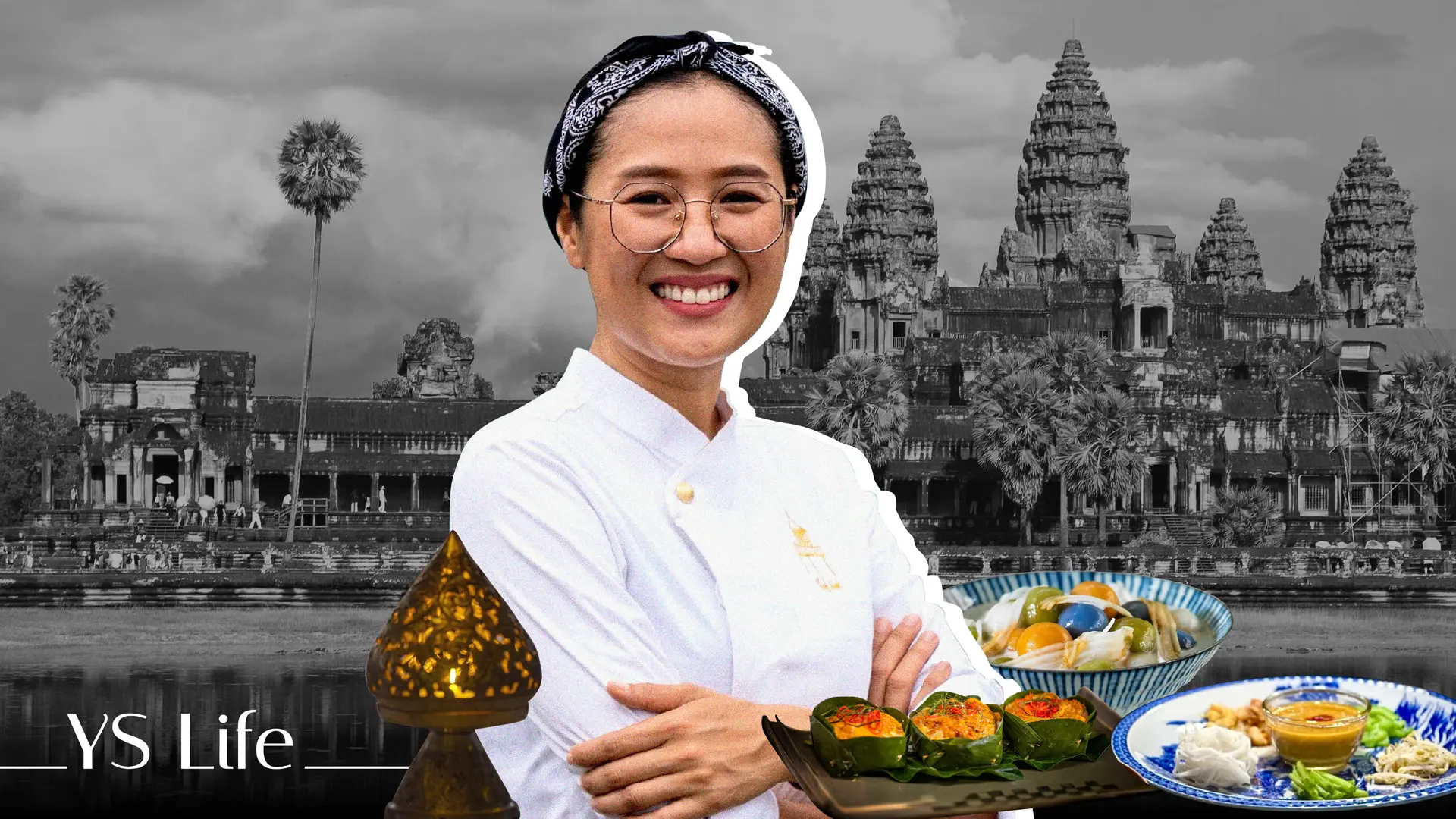
Chef Ros Rotanak, popularly known as Chef Nak, is one of the few women chefs around the world trying to revive and preserve the traditional recipes of Cambodian cuisine that were lost during the Khmer Rouge regime.
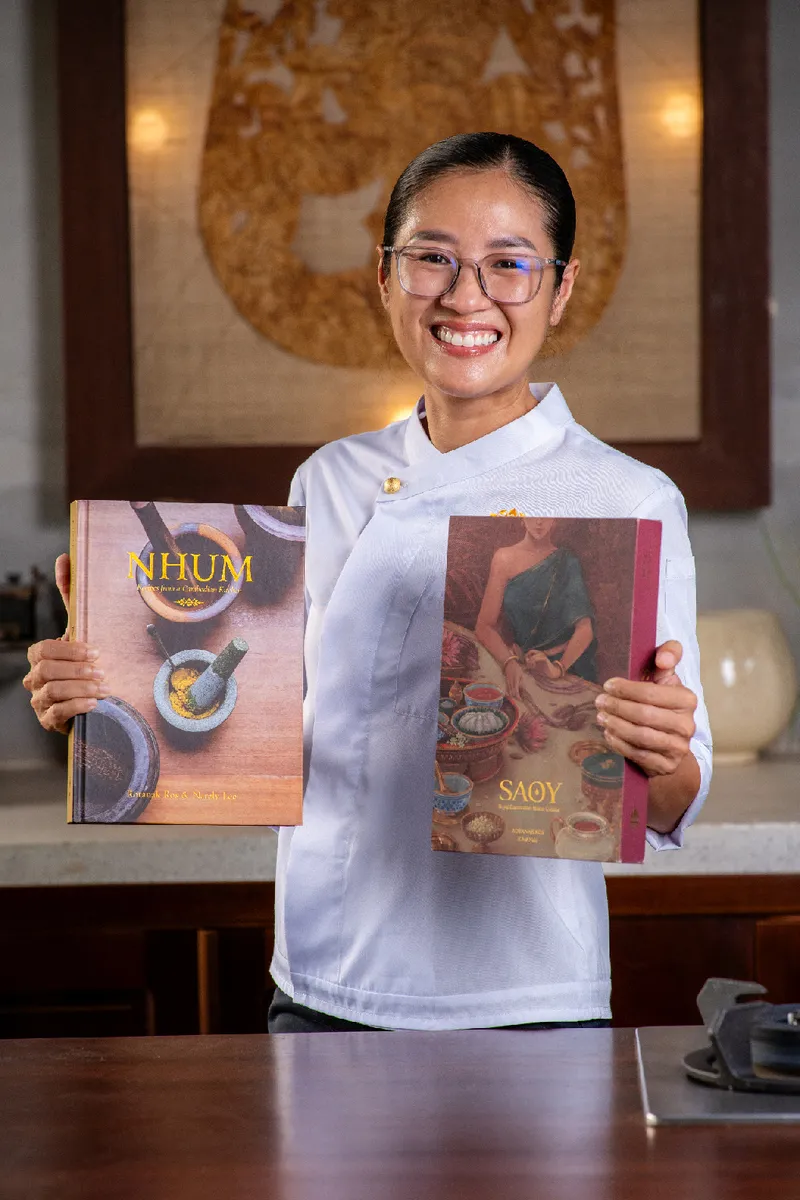
Chef Nak with her books Nhum and Saoy
Instead of following the conventional path of opening a restaurant or working as a chef in one, Chef Nak is curating culinary experiences for cultural exchange—including luxury home dining experiences; private cooking classes; international pop-ups; and collaborations with chefs, global organisations, and homestays for cultural immersion; besides consulting for restaurants across the world.
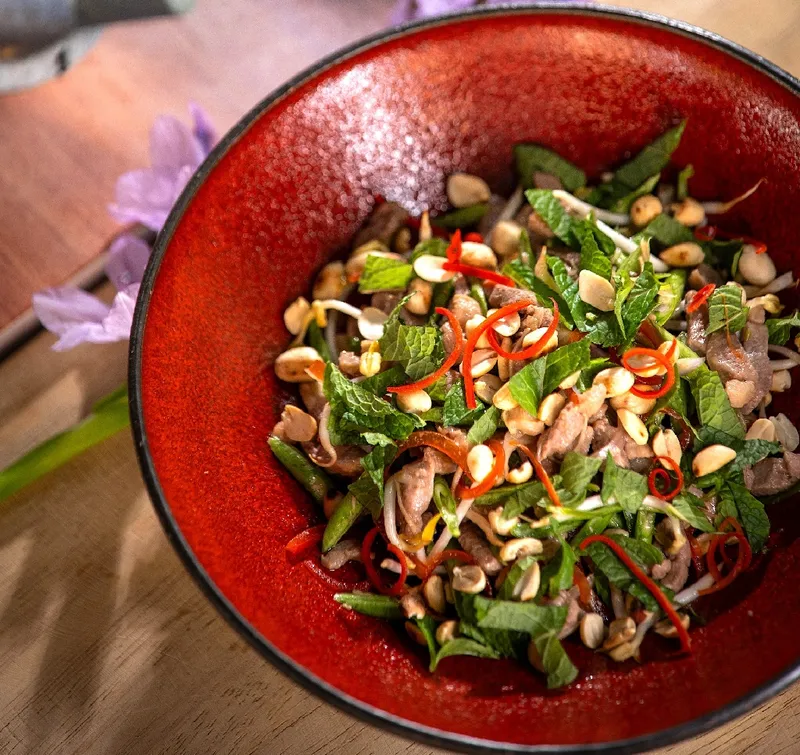
Chef Nak's Duck Salad
“I chose education and advocacy because I saw how urgent it was to document and protect our culinary heritage. I’ve always felt it’s my role to help preserve what remains—not just for Cambodia, but so the world can better understand who we are through our food,” Chef Nak tells YS Life during an exclusive conversation.
“To me, that impact is just as powerful—if not more—than what I could achieve with a single restaurant.”
Chef Nak has also authored two books—NHUM: Recipes from a Cambodian Kitchen, which captures the flavours of everyday Cambodian life, and SAOY: Royal Cambodian Home Cuisine, archiving forgotten Cambodian recipes.
She has also been associated with UNICEF, FAO, and World Bank for educational collaborations.
Interestingly, Bengaluru-based Khmer Kitchen—one of the few Cambodian restaurants in India—has worked with Chef Nak to better understand Cambodian cuisine and its traditions.
Reviving the forgotten
“For me, documenting and educating people about Cambodian cuisine isn’t just about food, but it’s about identity, memory and healing,” says Chef Nak.
In the 1970s, during the Khmer Rouge regime, restrictions were placed on food production and distribution, leading to famine and starvation. The regime focused on rice production, reducing Cambodian cuisine to a plain rice porridge. Cambodians were also banned from fishing in certain areas, leading to the decline of traditional food sources. People were forced to eat insects, frogs, and other small animals to avoid starvation.
Born just five years after the genocide, during the Civil War, while Cambodia was still recovering from the scars of the brutal communist regime, Chef Nak found solace in food. She says that growing up in post-war Cambodia meant living among silences, stories, and food reduced to survival.
“The war left deep scars that reached even our kitchens, where many traditions and techniques were lost. But even in that silence, food began to whisper back,” she says.
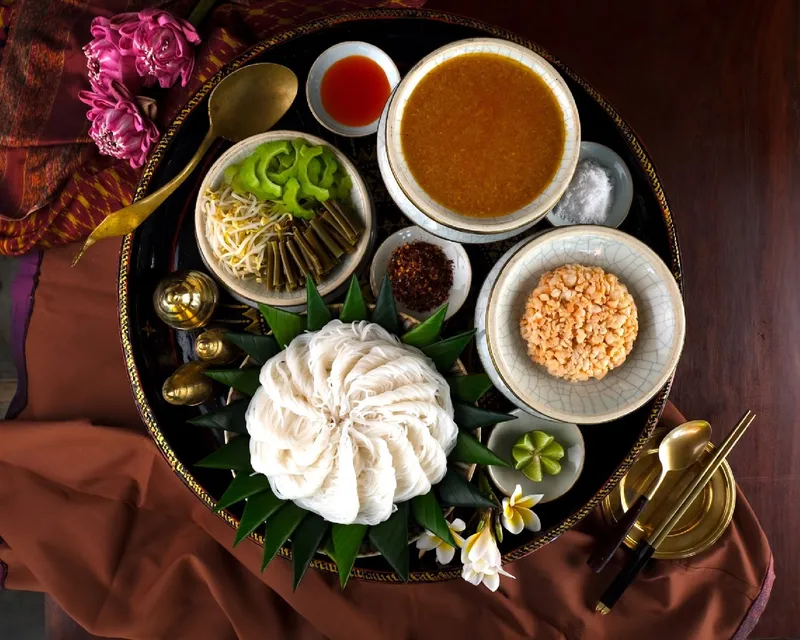
Num Bachok Namya Neu, fermented rice noodles | Image by: Lamo
Much later, in 2010, during a trip to the United States, Chef Nak realised how some restaurants in the States served Khmer food but called it Thai since not many diners were aware of the former. She thus embarked on a journey of travelling around Cambodia to learn the rare and forgotten recipes from the elders of villages.
Chef Nak wanted to bring the forgotten recipes back to life with care and creativity through books and cooking classes.
“I wasn’t just trying to write a book, I was trying to protect a piece of our identity that was at risk of disappearing,” she says.
“Cambodian cuisine isn’t just about food; it’s about identity, memory, and healing… Cooking became a way for me to reconnect with my identity as a woman, a daughter, a mother and a Cambodian...Each dish I remembered or learned from an elder became a seed of healing and remembrance. Food was no longer just nourishment, it became my language, my way of honoring the past and shaping the future.”
The chef also shares food stories through videos and digital platforms to connect with the younger generations and the global community.
“It’s not just putting Cambodian cuisine on the map, it’s about giving it the space, respect, and recognition it truly deserves,” she adds.
The language of food
In her early childhood in Cambodia’s capital city Phnom Penh, Chef Nak accompanied her mother to the market to select vegetables to sell. It was then that she first understood the importance of freshness, seasonality, and the language of ingredients.
“I learned how to spot the best herbs, the crispest greens, and the freshest proteins. Slowly, I began to sense that each ingredient carried not just flavour, but also history, nourishment, and story. That experience shaped me deeply into who I am and what I do today.”
This upbringing became the foundation for the chef’s love for Khmer cuisine. The memory from the market visits continues to guide her—as she revives lost recipes and curates intimate home dining experiences.
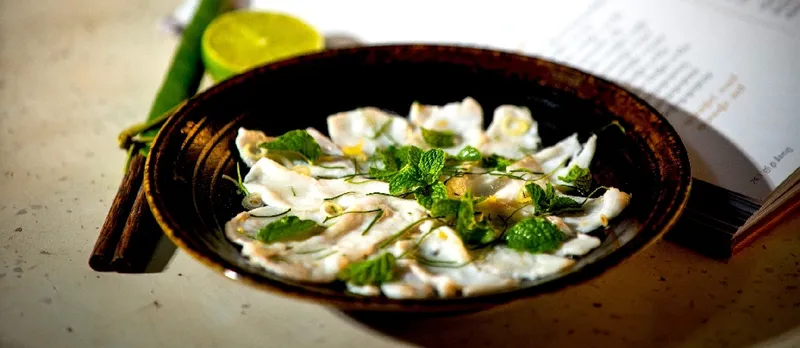
Chef Nak's Fish Ceviche | Image by: Veasna
“I learnt how to listen to the land, to the people, and to the legacy that lives in every dish we prepare.”
Cambodian cuisine, the chef explains, is a harmony of flavours—salty, sour, sweet, a little bitter, and umami, which is a savoury, meaty taste.
It is humble, nourishing, and deeply connected to Cambodia’s culture and way of life. Essential ingredients defining the cuisine include kroeung (fragrant lemongrass paste), prahok or fermented fish, tamarind, palm sugar, and an abundance of fresh herbs and vegetables.
For someone discovering Cambodian cuisine for the first time, the chef recommends grilled fish with tamarind sauce, served with herbs and rice noodles; Kampot seaweed salad; and white pearl soup, a royal Cambodian recipe with a clear, elegant broth.
“Like Indian cuisine, Cambodian food is deeply tied to ceremonies, family gatherings, and seasonal cycles. Our dishes are more than just meals—they are expressions of gratitude, identity, and spiritual connection,” she says, adding that she has found strong historical influences from South Indian cooking in Cambodian cuisine.
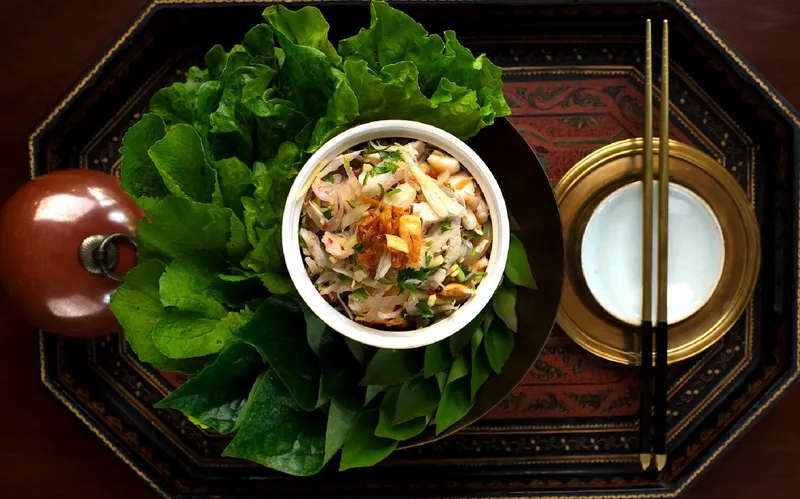
Meang Nem, a type of salad | Image by: Lamo
Impact of globalisation
“Food is one of the most powerful ways to tell our story. It carries not just taste, but history, resilience and hope,” says Chef Nak.
Staying true to traditional techniques is important for Chef Nak, which is why she emphasises on using the mortar and pestle to make spice pastes instead of relying on blenders. She also makes steamed dishes in banana leaves rather than foil.
Although this takes more time and effort, Chef Nak believes traditional techniques bring out flavours and textures that machines cannot replicate. “I truly believe that preserving these small details helps keep our culinary heritage alive.”
Globalisation has created new opportunities for Cambodian cuisine to be seen, tasted, appreciated, and celebrated worldwide. It has also allowed chefs like Nak to experience, innovate, and blend the traditional with modern techniques and international ingredients, while still staying true to the roots.
However, processed, imported, and fast food continues to be a challenge, often overshadowing rich culinary diversity and local farming practices, running the risk of old recipes being forgotten.
This is why Chef Nak’s work, which involves documenting rare recipes, cooking with elders, and sharing stories through cookbooks, social media, cooking classes, and dining experiences, becomes important.
Nak believes food should be creative and innovative, but interpretations like the use of mayonnaise, instead of the traditional well-balanced, sweet and sour dressing, in Cambodian salads are a big ‘no-no’.
Another example of experiments gone wrong is adding too much sugar, chilli, or even cream to Khmer soups, to suit international palates. This, Nak thinks, erases the quiet beauty and intention behind the dish—the soup is meant to be subtle and layered, not overly sweet or spicy.
“Cambodian cuisine has so much to offer to the world, but first, it must continue to be loved and respected here at home,” concludes Chef Nak.
Chef Ros Rotanak is visiting India for the first time to host a two-day pop-up at Zen, The Leela Palace Bengaluru, on June 13 and 14, 2025.
Edited by Swetha Kannan